Top

The Maple Leaf Cocktail

June 17, 2008

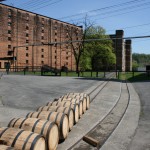
barrels.JPGBourbon is a little angry at the cocktail world . For such a long time, it was a cherished standby of the refined palate, a refuge from the candy cocktail plague. Bourbon was a more respected American take on nobility, if such a thing exists. Yes, Elijah Craig would have been very proud. Read more

The Whiskey Daisy

May 20, 2008

I would like to extend my apologies for not getting a classic cocktail up for you last Monday. At Drink Dogma, I am going to do my best to shed some light on the classics at the beginning of each week. In researching the Whiskey Daisy, it became quickly apparent that there are a lot of different recipes for this drink that hold very little in common with each other Read more

Woodford Reserve – The Labrot & Graham Distillery Tour

June 25, 2007

In a market generated by hype, the spirits industry’s fickle nature is often dominated by overall drink trends and popular perceptions of a super-premium status. Many brands have benefited from a public that associates quality with smoothness, creating a dominating demand for sweeter spirits. The traditional conception of American whiskey seemingly contradicts the sweeter social preference; however, the growth in mainstream popularity of bourbons like Woodford Reserve demonstrates the influence of trendy demands. Does this appeal to a sweeter, less harsh general palate negate quality? I don’t think so, and I love Woodford Reserve.

Woodford Reserve is a bourbon. To legally carry this label, the whiskey must be made from at least 51% corn, distilled at no more than 160 proof, and barreled for at least two years in new charred oak barrels. The variation in bourbon production results from several sources including length of barreling, barrel and storage conditions, type of water used in cutting the bourbon, and distillation processes and amounts, but the most influential and basic difference among bourbons results from the other 49%. Woodford uses only 18% rye and adds 10% barley, cutting back on the spicy elements of the rye. The result is a bourbon that is milder and sweeter. While relatively few bourbons utilize the wheated approach, the popularity of those that do have surged over the past few decades. Makers Mark pioneered this approach with little success until recently; recognizing this growth in demand for a sweeter bourbon, Brown Foreman began producing Woodford Reserve. Other examples of wheated bourbons include W.L. Weller, Pappy Van Winkle, and Old Fitzgerald. While not a wheated bourbon, Woodford Reserve is clearly appealing to this market.

The Labrot & Graham Distillery is the oldest operating distillery in Kentucky and was purchased and remodeled for the specific purpose of producing a higher quality milder bourbon. While many promotional efforts, namely the Kentucky Derby, have targeted a more mainstream market, Woodford Reserve like any quality lighter gin, less peaty scotch, or vodka produced outside of grain or potatoes is a great product. I traditionally try to promote smaller distilleries on this blog, but “Spirit of the Week” is about spirits that I like – this is definitely one of them.

Unlike most Kentucky distillery tours, the Woodford tour will cost you five dollars, but you do get a tasting at the conclusion of the tour. So hey, just consider the fee to be like buying Woodford at your local dive bar with a decent selection type place. The tour is extremely informative and the tour guides definitely understood the process better than any of the other tours I have been on. The tour starts with a video on bourbon (generic stuff) and follows with a visit to the distillery, warehouse, and bottling plant.

The Distillery

Despite being an extremely old site and building, the inside of the distillery is by far the most modern of any distillery in Kentucky. Computers are everywhere monitoring every aspect of the process. Everything is new; after being told so much about the history of the site at the onset of the tour, the evident modern approach takes away from the nostalgic conception of bourbon production.

Most notably, three large copper pot stills help to meet the ongoing demands of this major corporate brand. The sizes of the copper stills are enormous; to the left the distillation process is controlled and viewed through a glass casing. The distillery tour also covers barrel production and describes the importance of using new, charred American oak barrels to allow for the bourbon to take some of the burnt woods properties.

The Warehouse

The warehouse is less-remodeled and remains relatively unchanged, letting nature work her magic on the inside of the barrels. Woodford Reserve really picks up a lot from barreling, namely its vanilla tones. Additionally, Woodford is not barrel for a predetermined period. Instead, the batches are tested throughout maturation until a level of quality is reached. Other bourbons establish a specific time period, which can result in greater variation over periods of time. Different climate periods require varying barreling lengths to maintain consistency. Woodford Reserve utilizes this approach extremely effectively, improving its palate potential and creating another contention for the argument of its quality.

The Bottling Plant

The bottling plant was not operating during the tour, but in the bottling plant, we were allowed to smell Woodford Reserve at barrel strength. I could smell the Woodford Reserve all day after that experience. Bourbons are cut by water after barreling to a lower proof, which takes away from some of the flavor of the bourbon, but it does make it drinkable. Taking away from the corporate feel of Woodford was our tour companion, Elijah – the Labrot & Graham Distillery cat. I think this cat enjoyed bourbon with his mice because this had to be the friendliest cat I have ever met. He followed during the entire tour and expected to be pet from each member of our 20+ group.

Woodford Reserve is a great product produced by a quality distillery. While wheated bourbons and other milder approaches, such as that utilized by Woodford Reserve, seem to be trading the popularity of critics for that of conventional consumers, failing to see these bourbons as anything but an alternative approach in the wide spectrum of bourbon production is a mistake. Appreciation of bourbon requires an appreciation of all perspectives – even those that are created to make money off of popular trends. Trends often sacrifice quality, but popularity and quality are not mutually exclusive.

Kentucky Distillery Tours Continued - Buffalo Trace

May 29, 2007

I wanted to get back to discussing the tours that I went on before I left the Midwest as being here feels like a more appropriate place to write about them. The Buffalo Trace Distillery Tour was a little different than all of the rest for one simple reason: I was the only one on the tour.

I arrived at the Buffalo Trace Distillery early in the morning because it was closest to my hotel, opened sooner than the others, and would help me get to the other tours on time. This may be why I am the only one who showed up for the tour; people generally don’t engage in tasting this early, but hey, they were ready for those of us who do! This individual attention allowed me to ask several questions, and I probably had more inquiries while on this tour than the others because of the wide range of products that are made at the site. Here’s a list of some of the products that are made at the Buffalo Trace Distillery:

Whiskeys -

Ancient Age – 5 & 10 Year Old; 80, 86, 90 and 100 Proof
Benchmark – “Rye Recipe”; 80 Proof
Blanton’s – Single Barrel; “Rye Recipe”; 93 Proof
Buffalo Trace – 9 Year Old
Eagle Rare – Single Barrel; 10 Year Old; 90 Proof
Eagle Rare – 17 Year Old
Elmer T. Lee – Single Barrel; 10 Year Old; 90 Proof
George T. Stagg – 15 Year Old
Hancock’s Reserve – Single Barrel; 8 Year Old; 88.9 Proof
Old Charter – 8, 10, 12, & 13 Year Old; 80, 86, & 90 Proof
Rock Hill Farms – “Rye Recipe”; 100 Proof
Sazerac– Rye Whiskey; 6 & 9 Year Old
Thomas H. Handy – Rye Whiskey
Van Winkle – 10, 12, 15, 20, & 23 Year Old
W. L. Weller – “Wheated Bourbon”; 7, 10, & 12 Year Old; 90, 100, & 107 Proof

Others –

Rain Vodka – Organic; 7 Times Distilled
Regan’s Orange Bitters

I think I got all of that information right; I used a pamphlet that I received at the tour to make sure I got everything and didn’t include any in formation that wasn’t on the packet because I wanted to make sure I was accurate. The distillery also makes some other products I think, but I can’t remember which they were. Nevertheless, the most impressive thing about this incomplete list is the amount of creativity and diversity that is produced at the Buffalo Trace Distillery. It is truly a site of innovation.

While the distillery is certainly a place of varied production, this makes touring the multiple processes of productions more difficult. Instead of being permitted to tour the actual distillation equipment and facilities, I was shown a video that didn’t really detail the distillation process and would have fit as a generic introduction at any distillery. While this was a bit disappointing, such an approach might be beneficial for some people as a first tour because this video was simple and would be helpful for those who are unfamiliar with whiskey production.

The Warehouse

The highlight of the tour was clearly the warehouse, which Buffalo Trace really uses to impact the taste of their whiskeys. I was told that the middle of three floors at Buffalo Trace’s main warehouse is where the most important whiskeys are stored. The middle floor experiences the most flux in temperature and humidity which increases the potential for the whiskey to move in and out of the wood. The warehouse was also extremely old and had endured several floods from the nearby Kentucky River as evidenced by the waterlines which were about 15 feet up the walls.

The warehouse additionally held testing barrels which were being used to test different varieties of developmental whiskeys. Seeing those barrels just makes you wonder what could be in store for us next! New ryes? Another wheated bourbon? Who knows? The warehouse also, despite being one of the oldest in Kentucky, was the best kept out of those that I toured. The barrels showed the greatest integrity and were stored in clean warehouse which you could tell was attended to with the greatest detail.

The Bottling Plant

Buffalo Trace has several different bottling plants, but I was allowed access into one of the bottling plants where they were hand bottling Blanton’s and Eagle Rare 17 Year Old. More than anything that I learned at the bottling plant, I remember the people the most. They were the nicest group of people by far that I interacted with at any of the tours. There were about 30 people in the plant, and every single one of them said hello to me as I passed. Yes, this was probably a result of me being at the tour by myself, but that type of hospitality really made my experience so much more enjoyable. The bottling plant tour also allowed me to see the proof regulation of the whiskies which was done before bottling. Several of the bourbons were held in tanks at different temperature and my guide really emphasized the difference in the aroma of the whiskies which were at different temperatures, which one can really notice when drinking whiskey on the rocks or straight.

The Tasting Room

I had hoped that I would get to taste some Thomas Handy or something in the tasting room, but obviously that was expecting way too much. Instead, I got to taste Buffalo Trace Bourbon and Eagle Rare Single Barrel. I had previously had each of these whiskies before so I really wasn’t that interested in the tasting, but I was so much more conscious of the aroma when tasting the bourbons after being around the smell of bourbon which just engrosses you in the warehouse and bottling plant. Plus, who turns down free whiskey? The gift shop also had almost every bottle as far as I could tell that they produced on the site, including some Rain and Regan’s orange bitters, which I picked up. I wanted to get some other stuff (and now regret that I didn’t take the opportunity), but I was trying to make this a budget trip, so I didn’t want to get carried away that early in the day.

The tour was one of my favorites because of the people at the distillery. My tour guide and the people working at the distillery really made my experience memorable, and I would highly recommend going on the tour. The grounds of the property are beautiful and surrounded by history, and the Buffalo Trace Distillery truly represents the best of Kentucky values which is reflected in the products they create. It made the whole trip worthwhile, but after leaving Buffalo Trace I headed directly (well not “directly” – I got lost) for some Woodford Reserve. Be sure to check back soon for my review of this tour and some information on Woodford Reserve.

Kentucky Bourbon Distillery Tours – Makers Mark

May 10, 2007

Before I left the area, I wanted to make sure that I did something I had always wanted to do – tour the distilleries in Kentucky. Yes, I know that an hour south of Chicago isn’t really “the area”, but hey, it was close enough to count. So, I completed my Tuesday duties, packed up my bags, drove until 2:00am to get there, slept for a couple of hours, and got up early to get in as many tours as possible. Despite my efforts, I was only able to visit four distilleries (three and half really as touring had ended at Jim Beam when I arrived). I also visited the Buffalo Trace Distillery, the Labrot and Graham Distillery (Woodford Reserve), and Makers Mark Distillery. I would have liked to visit others which were close by and easily accessible; however, I only had one day and chose these because of advice from a friend who had taken a similar trip and my own personal interests.

Overall, each of the tours was awesome and provided its own unique contribution to my understanding of Kentucky’s magical elixir. Knowledge aside, the sites were amazing and would have been worth the trip alone. I want to recap each of the tours I went on over the next few days. I would highly recommend taking a similar trip if you are slightly interested; you will not be disappointed. I would also advise making more time than I did for the trip so you don’t have to make the choices I did. Also, don’t try and drive back to Illinois by yourself after standing on your feet all day on a few hours of sleep. You will be forced to consume the horrible beverage that is Red Bull, which may just ruin your entire day of tasting.

MAKER’S MARK –

Maker’s Mark was definitely the most interactive tour that I took today. While it was less informative than others (and this may be because it was the last one I took and was ignoring the “how whisky is made” lecture all over again), I got to do things like taste from the fermentation tanks and dip my own bottle of Maker’s. The site itself was also the most distinct distillery I visited. While other distilleries focused on preserving the historical elements of the sites (which I definitely support), each of the buildings on the Maker’s properties is painted a dark brown color and accented with red, representing the trademark wax color of Maker’s Mark. Even the shutters on the buildings are given the Maker’s touch with cutouts of the bottle shape. There were four major parts of the tour: the distillery, the printing room, the bottling plant, and the warehouse.

The Distillery

The distillery entrance is extremely impressive. The stills brightly welcome you and the aroma of the fermentation slaps you right in the face. Maker’s distinguishing feature is the use of wheat, making it a “wheated” bourbon. One of the requirements of bourbon is that it must be made of at least 51% corn, but some amount of rye is also usually used. Maker’s Mark cuts back on the rye and uses wheat, which creates and milder, sweeter whisky.

Maker’s Mark also uses a sour mash, meaning that a portion of the fermented mash from the previous batch is added to each new batch to create consistency. Maker’s Mark actually let us taste from the fermentation tanks. We were able to taste from a new batch an old batch. The difference in taste from the three day fermentation process was incredible. The new batch was very bland, while the older batch was very sour. This was one of the best parts of the tours today because it really helped me to understand the fermentation’s impact from a taste perspective, an opportunity you just don’t get everyday. The fermentation process was also happening live as we were able to look down into the huge cypress fermentation tanks. I shot a quick video of one of the more active tanks to show what this looked like; you can see it here.

After exploring the fermentation tanks, the distillation process was on display in the stills. These stills were so shiny and designed to show the clear color of the flowing whisky. The distillery was the best part of the tour by far!

The Printing Room

This room was pretty much a huge gimmick. The room does hold a 100 year-old printing press which is used to make each of the labels for Maker’s Mark bottles, but the existence of the press seemed to be used only to reaffirm the “handmade” philosophy of Maker’s Mark. Interestingly however, Maker’s mark actually seemed to have less employees and more technology than any other distillery. Except for this printing room, I got less of a “handmade” feel from this distillery than any other, even the Labrot and Graham Distillery which is very proud of its new technology. They did give us our own label though; I’ll always take a free souvenir, even if it isn’t much.

The Bottling Plant

Again, the “handmade” approach was gone. I expected a hand-bottling process like the one I saw at Buffalo Trace, but instead, the bottling plant was very quick and modern. Maker’s does a ton of business though, so this should be expected, but for all the talk about the hand-dipping process, I think I just expected to see more individual attention. It doesn’t really matter; it just seemed different than the rhetoric that Maker’s Mark likes to profess.

The dipping process required the workers to work very quickly to keep up with the assembly line of bottles coming. After dipping, the bottle were passed through a cooling box of fans and boxed. If you go, you will notice that Maker’s Mark kind of goes overboard with its waxing though. I know its your trademark look, but nearly everything in the gift shop and everywhere else was dipped in that red wax! If you want a wax-dipped hat, you can get one. I would have had trouble finding something without wax if I tried! Also, I don’t know about your anal perceptions, but I really hate Maker’s bottles with the long wax strands hanging all over the place. They tend to bow out and look sloppy. The simpler ones just look better and would cost less in wax cost (not that they are concerned obviously). I now have a face to blame when I get a sloppy one. This lady was waxing these bottles like crazy - today’s batch will have wax all over the place! But, hey she had so much to keep up with; you can’t really blame her.

The Warehouse

The warehouse was like all of the others – impressive. Even looking at the warehouse from the outside and inside, it is hard to imagine just how much whisky is in there. The barrels are so heavy, and there are so many floors of them. The design of each of the warehouses is probably the most impressive characteristic of these structures because they take advantage of every square inch. The Maker’s warehouse seemed cooler than the others, and consequently, the aroma of the whisky wasn’t as strong. The warehouse also seemed dirtier/older, and the barrels seemed to have more leaking problems. The warehouse actually made me think twice about Maker’s quality. Not only did the warehouse seem less maintained, we were also told that only one barrel is tasted from each batch to determine if aging is complete. Each other distillery individually tasted each barrel, even if they come from the same batch.

Despite some of my critical points, the Maker’s tour was extremely unique and gave me access to things that I will rarely have the opportunity to do. I think that this tour is one that you definitely need to go on if you want to visit the distilleries. As for the Maker’s Mark product, the tour actually made me think less of the whisky, which I don’t think is the tour’s intention. The entire process seemed less careful than the others. Part of this was because of specifics I pointed out, but overall it was just a feeling I got more than anything else. Either way, I like the end product and am sure I will continue to drink more in the future. Next up: the Buffalo Trace Distillery…

Bottom